
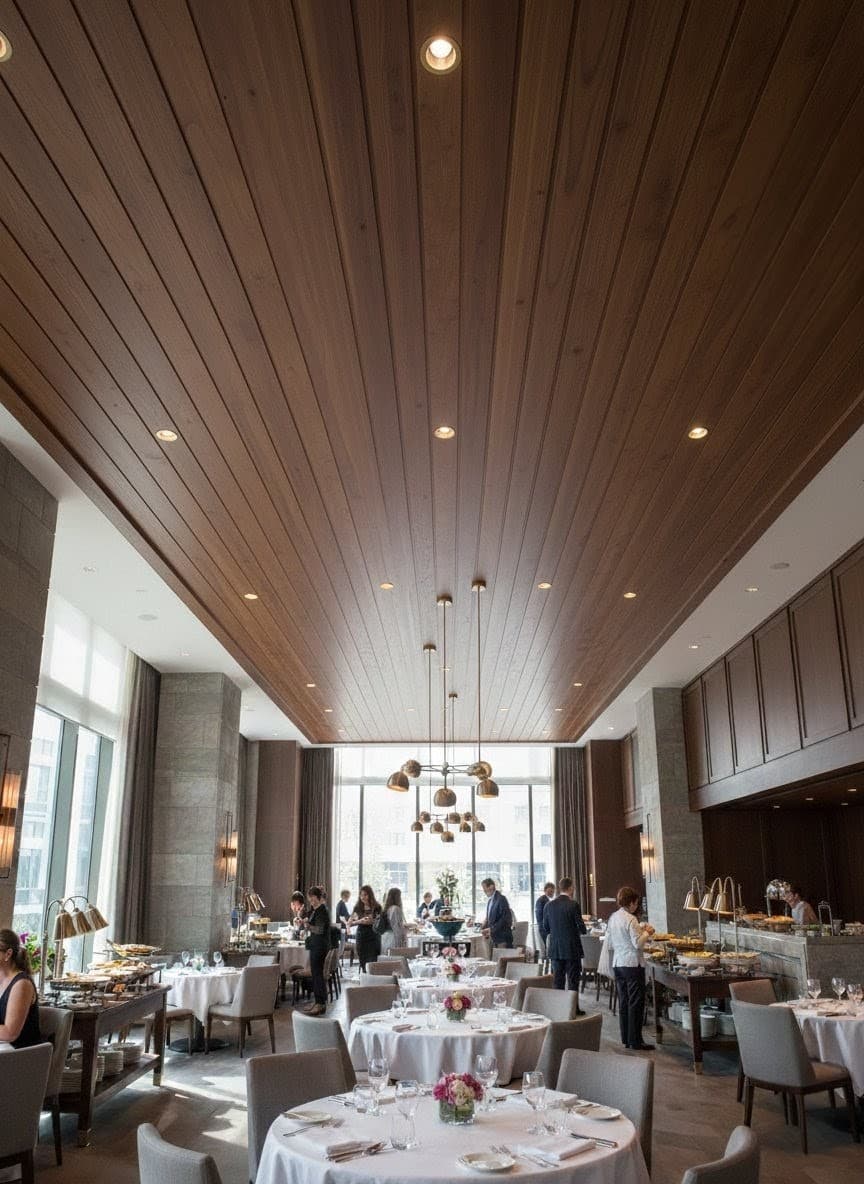
Commercial interior design in India is evolving rapidly. As offices, retail spaces, hospitality projects, healthcare facilities, and institutional buildings become more experience-driven, ceiling design is no longer just a functional layer—it is a strategic design element that influences branding, acoustics, lighting efficiency, and spatial perception.
As we move into 2026, commercial ceiling design trends in India are being shaped by sustainability goals, cost efficiency, faster project execution, and visual sophistication. This blog explores the most important ceiling design trends for 2026, with practical insights for Indian architects, interior designers, builders, and commercial property owners.
1. Ceilings as a Design Feature, Not a Background Element
Traditionally, commercial ceilings in India were treated as neutral surfaces—mostly gypsum boards or mineral tiles. In 2026, this mindset has shifted.
Ceilings are now being:
- Used to define zones in open layouts
- Integrated with branding and architectural language
- Designed to enhance perceived ceiling height and openness
Linear soffit-style ceiling panels, wood-finish slats, and textured surfaces are increasingly replacing flat white ceilings in:
- Corporate offices
- Premium retail stores
- Hotel lobbies and restaurants
- Co-working spaces
These designs create visual rhythm while maintaining a clean, professional look.
2. Rise of Modular & Prefabricated Ceiling Systems
Speed of execution is a major concern in Indian commercial projects due to tight timelines and labour constraints. As a result, modular ceiling systems are one of the biggest trends for 2026.
Key reasons for their popularity:
- Faster installation
- Consistent factory finish
- Easy maintenance and replacement
- Reduced on-site wastage
Soffit-style ceiling panels fit perfectly into this trend, especially in projects where design consistency across multiple locations is required—such as retail chains, corporate offices, and hospitality brands.
Modular ceiling systems also align well with India's growing demand for scalable commercial interiors.
3. Natural Finishes & Warm Tones Dominate Commercial Spaces
In 2026, Indian commercial interiors are moving away from cold, industrial aesthetics toward warmer, more human-centric environments.
Popular ceiling finish trends include:
- Wood-look finishes (walnut, oak, teak tones)
- Ashwood greys and muted browns
- Matte and low-sheen textures
Soffit panels with woodgrain or textured finishes are increasingly used on ceilings and selective interior walls to bring warmth without the maintenance issues of natural wood.
This trend is especially visible in:
- Corporate boardrooms
- Boutique hotels
- Cafés and premium retail spaces
4. Acoustic Comfort Becomes a Priority
With open-plan offices, co-working spaces, and mixed-use commercial layouts becoming common in India, acoustic performance is now a design necessity, not a luxury.
In 2026:
- Ceilings are being designed to reduce echo and noise fatigue
- Designers are combining visual aesthetics with sound control
- Linear ceiling elements help break sound waves
Soffit-style ceiling designs, when integrated with acoustic backing or smart layouts, contribute to improved sound comfort while maintaining visual continuity.
This is particularly relevant for:
- Offices
- Conference rooms
- Restaurants and food courts
- Educational institutions
5. Integration of Lighting into Ceiling Design
Another defining trend for commercial ceilings in 2026 is seamless lighting integration.
Instead of surface-mounted lights, designers are opting for:
- Linear LED lighting integrated within ceiling panels
- Cove lighting combined with soffit ceilings
- Soft indirect lighting for premium commercial spaces
Soffit ceiling panels allow lighting to be:
- Cleanly recessed
- Aligned with architectural lines
- Used to highlight textures and finishes
This approach improves energy efficiency and enhances the overall ambience—critical for Indian commercial spaces that operate long hours.
6. Sustainability & Low-Maintenance Materials Gain Importance
Sustainability is no longer limited to green certifications—it is now driven by long-term operational costs.
In the Indian context, commercial ceiling materials are being evaluated on:
- Durability
- Ease of cleaning
- Resistance to moisture and humidity
- Long service life
Materials that reduce repainting, frequent repairs, or replacements are preferred. Soffit-style panels made for interior use meet these expectations while offering design flexibility.
This trend is especially relevant in:
- Tier 2 and Tier 3 cities
- High-footfall commercial areas
- Hospitality and healthcare projects
7. Ceiling Design Supporting Brand Identity
For retail chains, offices, and hospitality brands, ceilings are now used as brand reinforcement tools.
In 2026:
- Repeating ceiling patterns help establish brand recall
- Signature ceiling finishes are replicated across locations
- Textured or slatted ceilings create a premium brand feel
Soffit panels allow designers to maintain uniformity across multiple sites, which is a major advantage for expanding Indian brands.
8. Focus on Interior Applications Over Exposure
Commercial ceiling designs in India are increasingly planned with controlled interior environments in mind.
Soffit panels are:
- Widely used on ceilings and interior walls
- Installed in shaded or enclosed areas
- Selected based on interior-grade performance
Designers typically ensure that panels used indoors are not exposed to direct sunlight, unless the product is specifically designed for exterior-grade applications.
This approach ensures long-term visual stability and performance, especially in Indian climatic conditions.
9. Multi-Functional Ceilings for Smart Commercial Spaces
By 2026, ceilings are expected to do more than look good.
Modern commercial ceilings now integrate:
- Lighting
- HVAC concealment
- Acoustics
- Fire safety planning
Linear soffit-style ceiling systems allow easy coordination between multiple services without cluttering the visual space—an important requirement in modern Indian commercial buildings.
10. Demand Growth Across Indian Cities
Ceiling design innovation is no longer limited to metro cities.
In 2026, strong demand is seen in:
- Bengaluru, Hyderabad, Pune, NCR
- Ahmedabad, Indore, Jaipur
- Guwahati, Bhubaneswar, Kochi
As commercial real estate expands in these regions, cost-effective yet premium ceiling solutions are in high demand—making soffit panels a practical choice for architects and developers.
Final Thoughts: The Future of Commercial Ceilings in India
The commercial ceiling design trends of 2026 clearly indicate a shift toward:
- Design-led ceilings
- Modular and scalable solutions
- Warm, natural finishes
- Integrated lighting and acoustics
- Long-term durability and low maintenance
For Indian commercial interiors, soffit-style ceiling panels align perfectly with these trends when used thoughtfully in interior environments.
As businesses increasingly view interiors as a strategic investment, ceiling design will continue to play a key role in shaping modern, functional, and visually engaging commercial spaces.
