
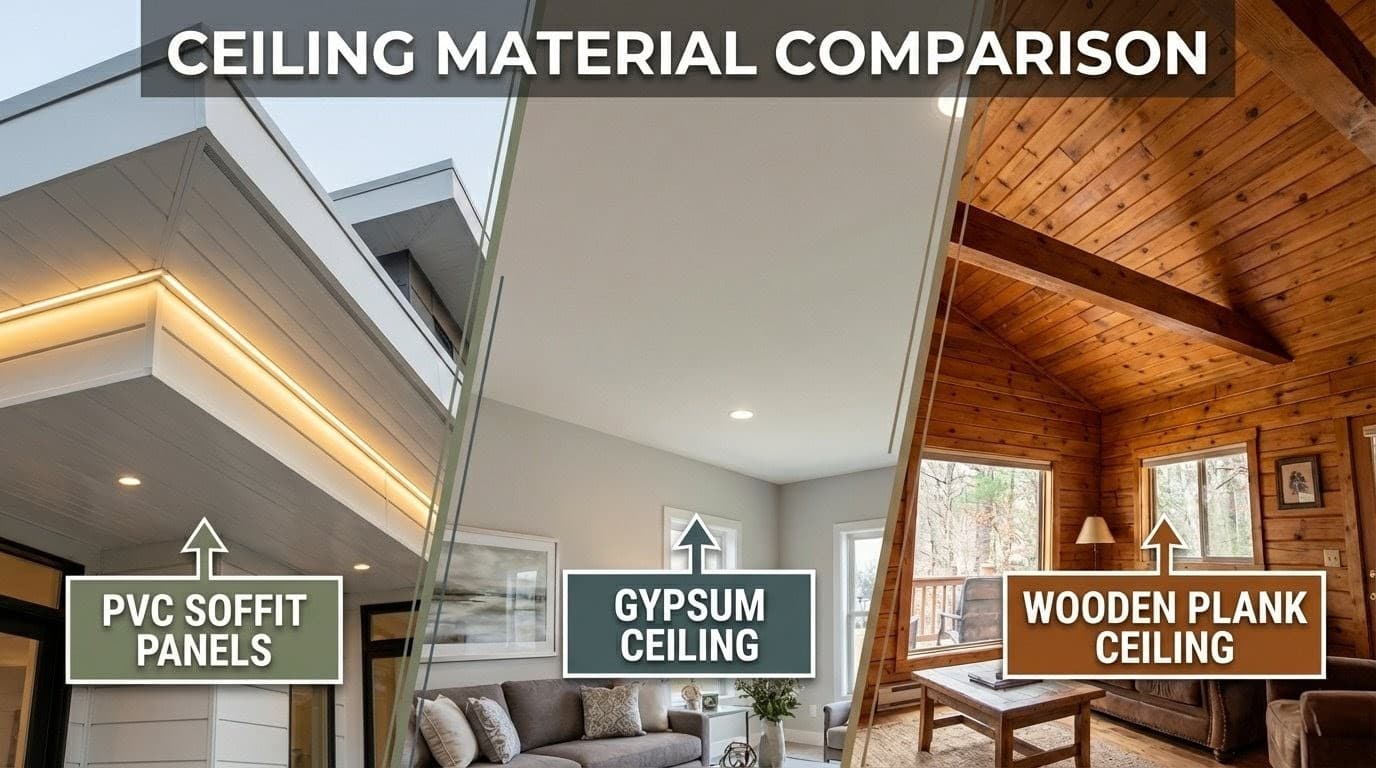
When it comes to modern Indian home interiors, ceilings and accent walls are no longer just structural necessities—they play a critical role in aesthetics, comfort, and long-term maintenance. Among the most commonly considered materials today are PVC soffit panels, gypsum false ceilings, and wooden planks.
Each of these materials has its own strengths and limitations, especially when evaluated in the Indian climate, lifestyle, and cost-sensitive market. This detailed comparison will help homeowners, interior designers, and architects choose the right solution based on durability, maintenance, aesthetics, climate suitability, and value for money.
Understanding the Three Materials
1. PVC Soffit Panels
PVC soffit panels are factory-manufactured panels made from high-quality polyvinyl chloride. In India, they are increasingly used for ceilings, concealed areas, balconies (covered), corridors, and interior wall cladding.
Important note: For open exteriors, exterior-grade UV-stabilised soffit panels should be used.
2. Gypsum False Ceilings
Gypsum ceilings are widely popular in Indian homes, especially in urban apartments. They consist of gypsum boards mounted on metal frameworks, often used to create false ceilings, cove lighting, and design patterns.
3. Wooden Planks (Natural or Engineered)
Wooden ceilings or wall planks—whether natural hardwood or engineered wood—offer a premium, warm aesthetic. They are mostly used in luxury homes, villas, or boutique interior projects.
Key Comparison Parameters for Indian Homes
Let's compare these materials across the most relevant factors for Indian households.
1. Climate Suitability in India
PVC Soffit Panels
- ☑ Highly resistant to humidity, making them ideal for coastal regions, North East India, and monsoon-heavy areas
- ☑ Do not absorb moisture or swell
- ☑ Suitable for kitchens, bathrooms, utility areas, and living spaces
Gypsum Ceiling
- ✖ Sensitive to moisture and seepage
- ✖ Can sag, crack, or stain in high-humidity environments
- ☑ Works well in dry, well-ventilated interiors
Wooden Planks
- ✖ Natural wood expands and contracts with humidity
- ✖ Prone to warping and termite attacks if not treated properly
- ☑ Best suited for air-conditioned, low-humidity spaces
Winner for Indian climate: PVC soffit panels
2. Maintenance & Longevity
PVC Soffit Panels
- ☑ Termite-proof
- ☑ Rust-proof
- ☑ Easy to clean with a damp cloth
- ☑ Lifespan of 15–25 years with minimal maintenance
Gypsum Ceiling
- ✖ Prone to cracks over time
- ✖ Requires repainting
- ✖ Repairs can be messy and time-consuming
Wooden Planks
- ✖ Requires periodic polishing or coating
- ✖ Vulnerable to termites and fungal growth
- ✖ High long-term maintenance cost
Winner: PVC soffit panels
3. Installation Time & Disruption
PVC Soffit Panels
- ☑ Dry installation process
- ☑ Faster completion
- ☑ Minimal dust and mess
- ☑ Suitable for occupied homes
Gypsum Ceiling
- ✖ Involves cutting, jointing, sanding, and painting
- ✖ Dust-heavy installation
- ✖ Longer execution time
Wooden Planks
- ✖ Skilled carpentry required
- ✖ Time-intensive installation
Winner: PVC soffit panels
4. Aesthetic Flexibility & Design Options
PVC Soffit Panels
- ☑ Available in wood textures, solid colours & matte finishes
- ☑ Clean, modern look
- ☑ Seamless appearance for contemporary interiors
- ☑ Preferred for minimalist and modern Indian homes
Gypsum Ceiling
- ☑ Allows complex shapes, curves, and lighting coves
- ☑ Popular for decorative false ceilings
- ✖ Limited surface textures without additional treatments
Wooden Planks
- ☑ Rich, premium appearance
- ☑ Natural grain patterns
- ✖ Limited design variation
- ✖ Dark tones may not suit smaller Indian homes
Winner: Depends on design intent
- Modern & low-maintenance → PVC soffit panels
- Decorative lighting designs → Gypsum
- Luxury warmth → Wooden planks
5. Cost Comparison (Indian Market Perspective)
Cost comparison by material:
- PVC Soffit Panels: Low long-term cost
- Gypsum Ceiling: Medium long-term cost
- Wooden Planks: High long-term cost
While gypsum may appear cheaper initially, maintenance and repair costs over time often make PVC soffit panels more economical.
6. Suitability for Different Indian Home Areas
PVC Soffit Panels - Best Applications:
- Living room ceilings
- Bedrooms
- Kitchens
- Bathrooms
- Passageways
- Covered balconies
- Interior wall accents
Gypsum Ceiling - Best Applications:
- Living rooms with decorative lighting
- Bedrooms with cove lighting
- Dry interior spaces
Wooden Planks - Best Applications:
- Accent ceilings
- Feature walls
- Luxury villas and bungalows
7. Fire Safety & Health Considerations
PVC Soffit Panels
- ☑ Self-extinguishing grades available
- ☑ Does not promote mould growth
- ☑ Hygienic and safe for homes
Gypsum Ceiling
- ☑ Naturally fire-resistant
- ☑ Good thermal properties
Wooden Planks
- ✖ Combustible material
- ✖ Requires fire-retardant coatings
8. Sustainability & Modern Indian Preferences
Indian homeowners today prefer:
- Low-maintenance materials
- Long-lasting finishes
- Clean, clutter-free designs
- Faster project completion
PVC soffit panels align well with modern Indian urban lifestyles, especially for apartments and mid-size homes where maintenance and durability are key decision factors.
Final Verdict: Which Is Better for Indian Homes?
Choose PVC Soffit Panels if you want:
- High durability
- Moisture and termite resistance
- Clean modern aesthetics
- Low maintenance
- Faster installation
- Long-term value
Choose Gypsum Ceiling if:
- Decorative lighting and shapes are a priority
- The space is dry and well-maintained
Choose Wooden Planks if:
- You want a luxury statement
- Budget and maintenance are not constraints
Conclusion
For most Indian homes, especially apartments, independent houses in humid regions, and modern interiors, PVC soffit panels offer the best balance of performance, aesthetics, and cost-effectiveness.
When used indoors or in shaded areas, they provide a long-lasting, visually appealing ceiling and wall solution that meets the practical demands of Indian living—without frequent repairs or high maintenance.
